The Challenge & Our Solution
The problem
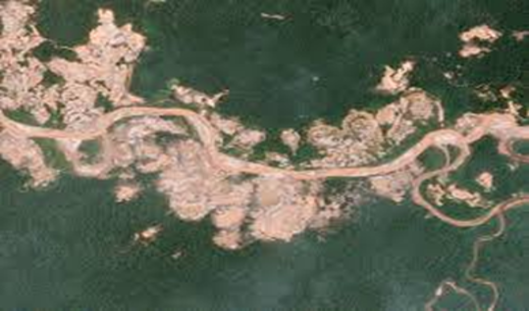
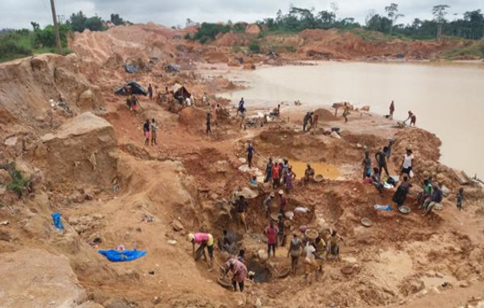
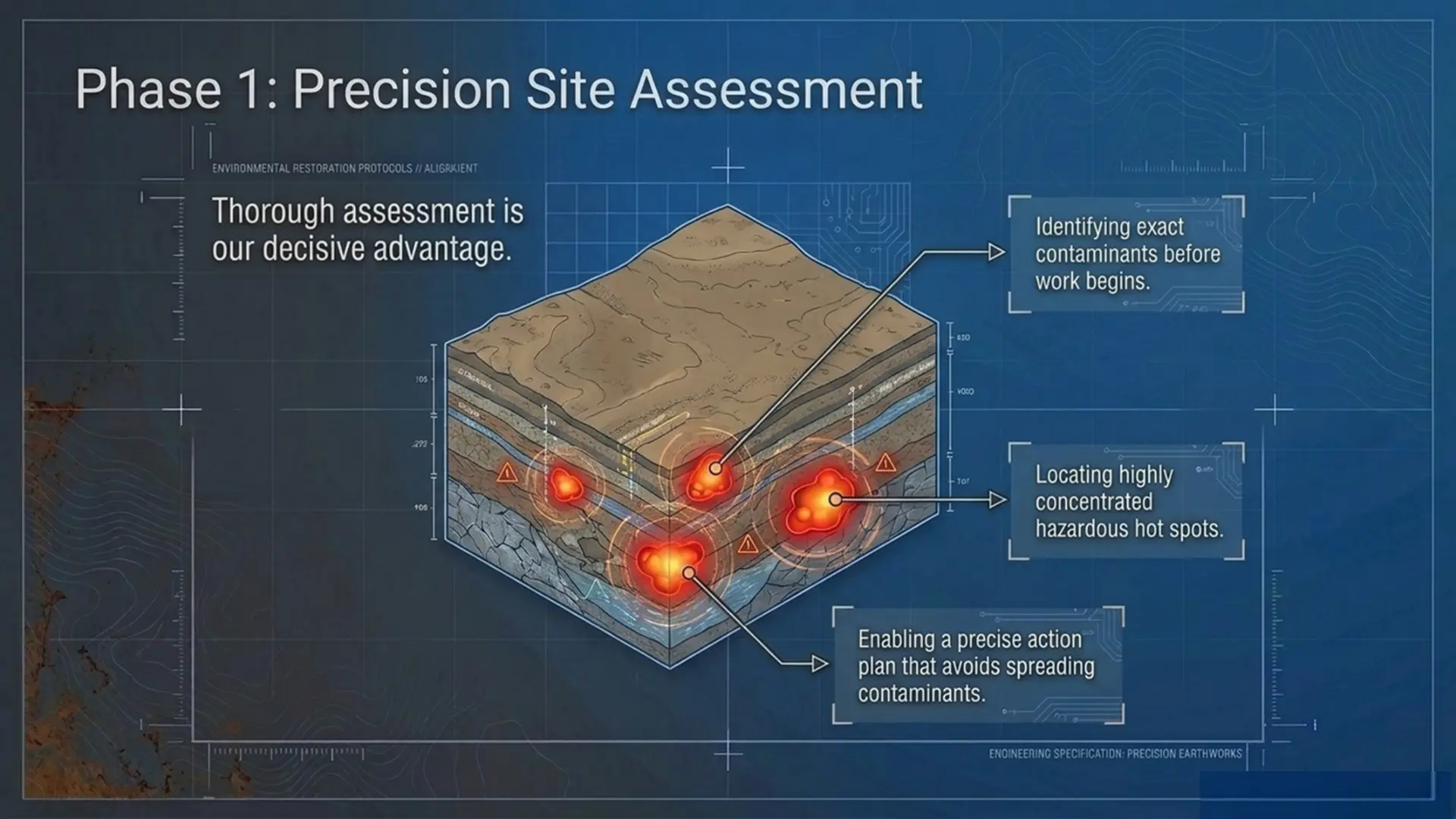
Many sites have been illegally mined without government approval and abandoned in a state of environmental emergency, with no plan for remediation. These properties remain contaminated and unusable.
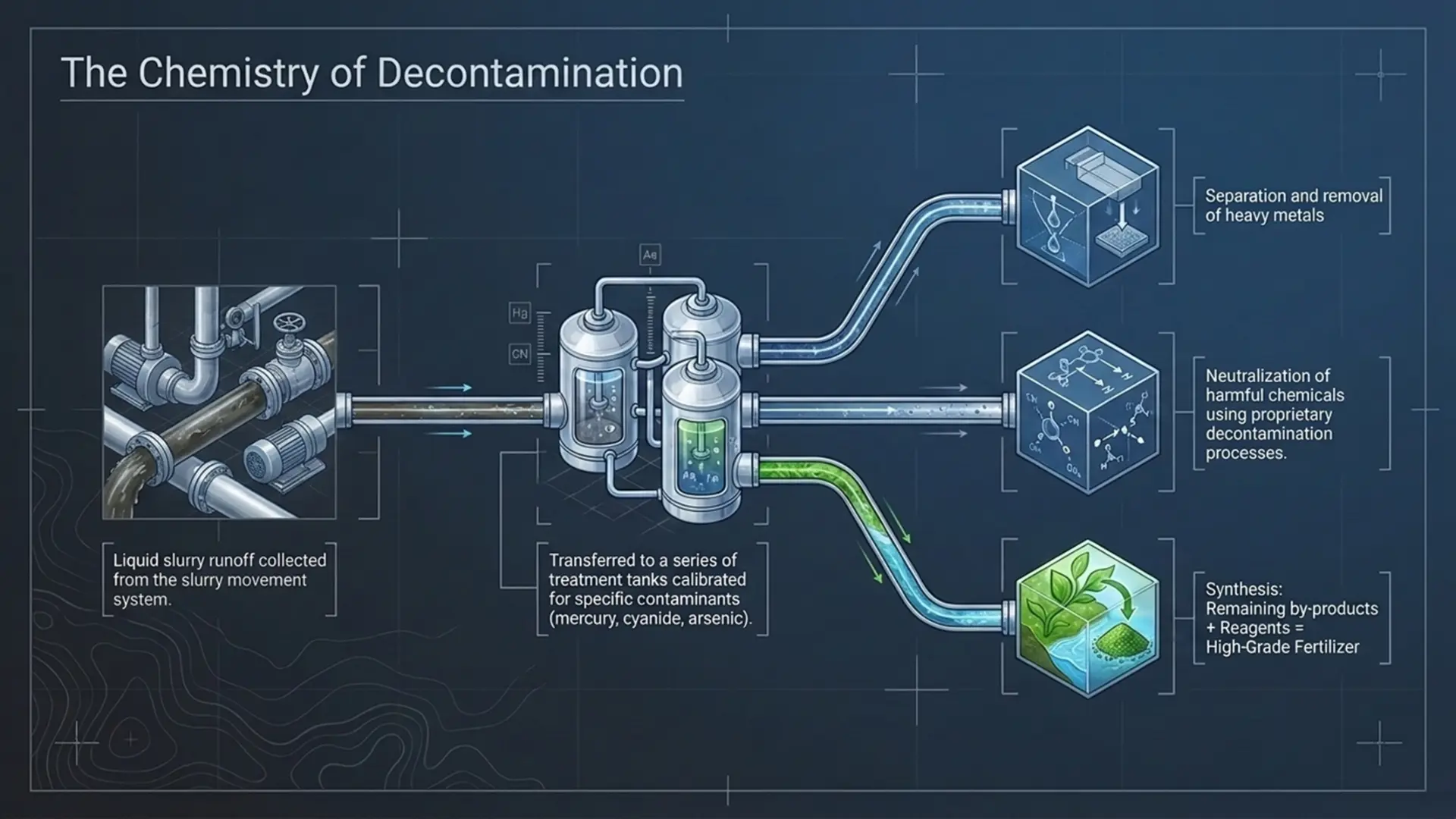
Harmful substances such as mercury, cyanide, arsenic, and other heavy metals can persist in the soil and water, posing serious health risks to workers and communities and preventing the land from being used again.
The solution
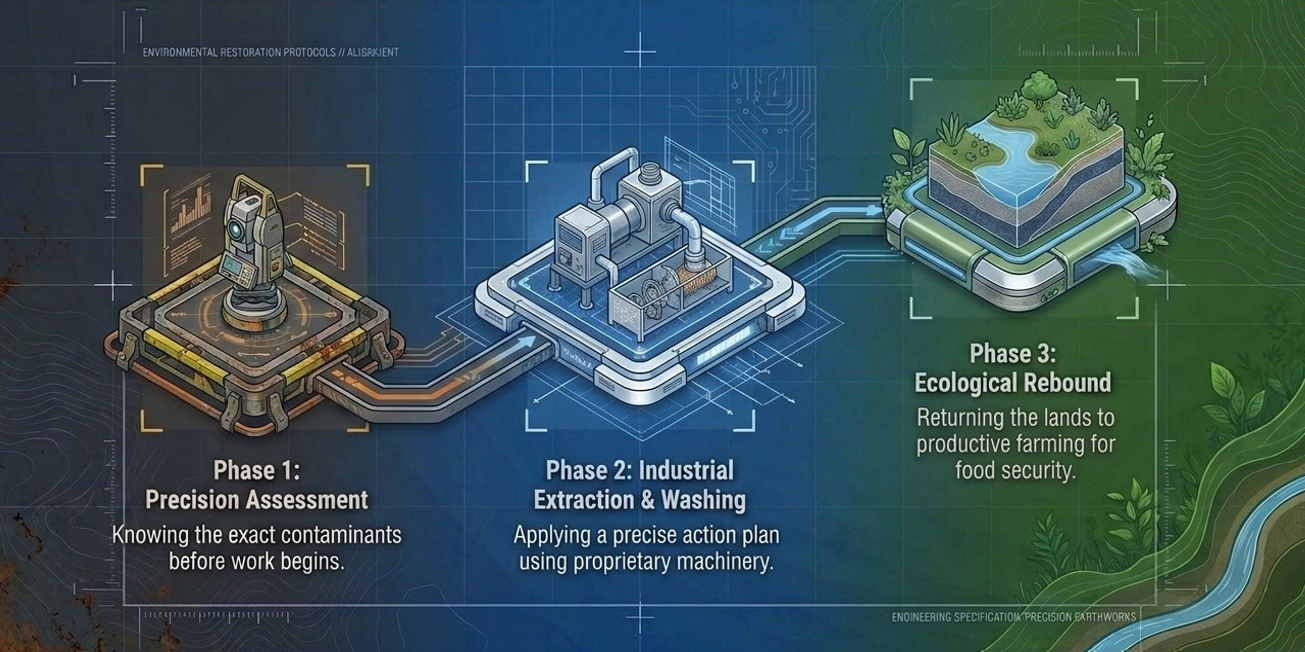
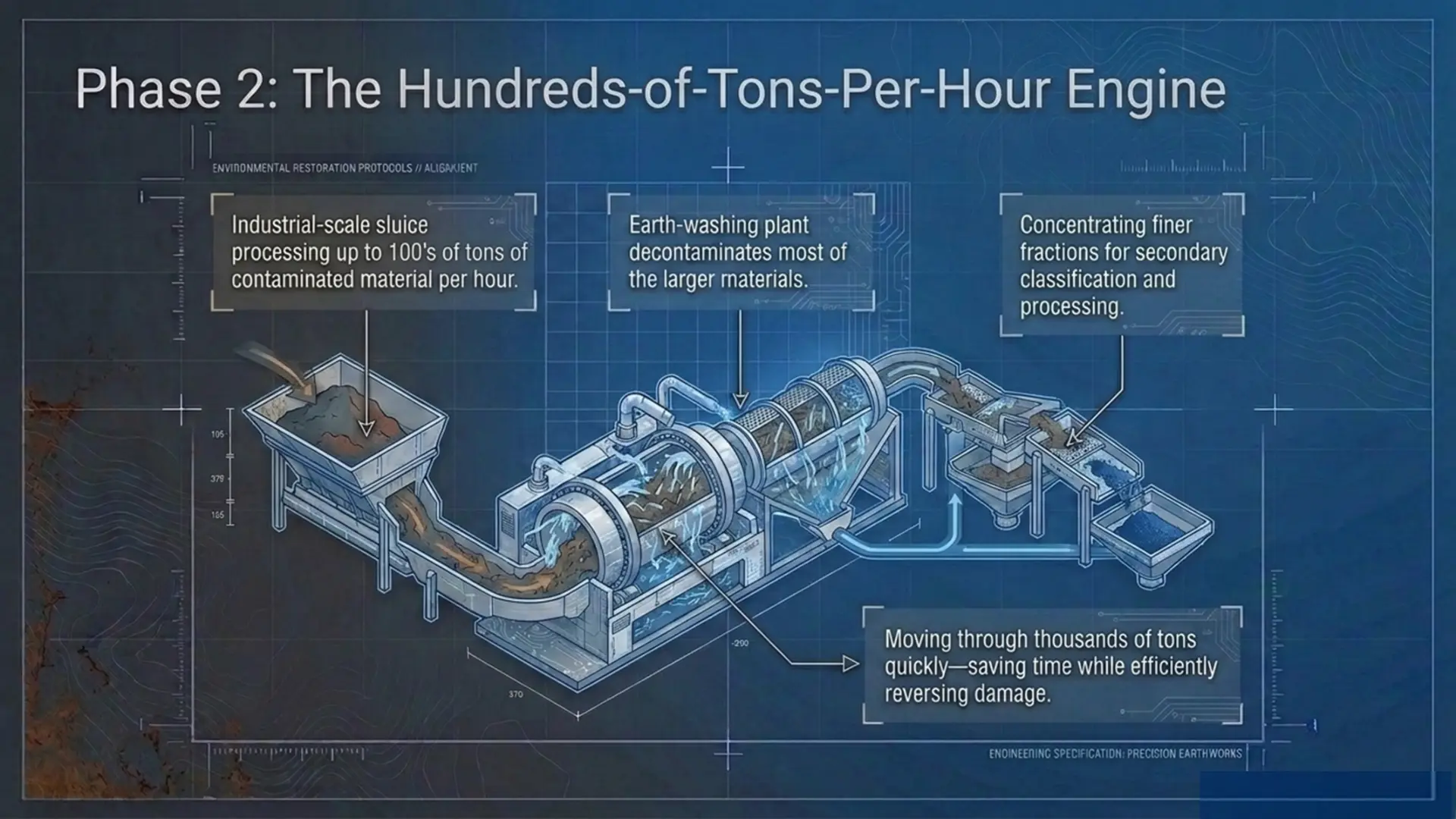
Once calibrated for the specific contaminants present, our process separates and removes heavy metals and chemicals. This allows the land to be reclaimed for productive use.
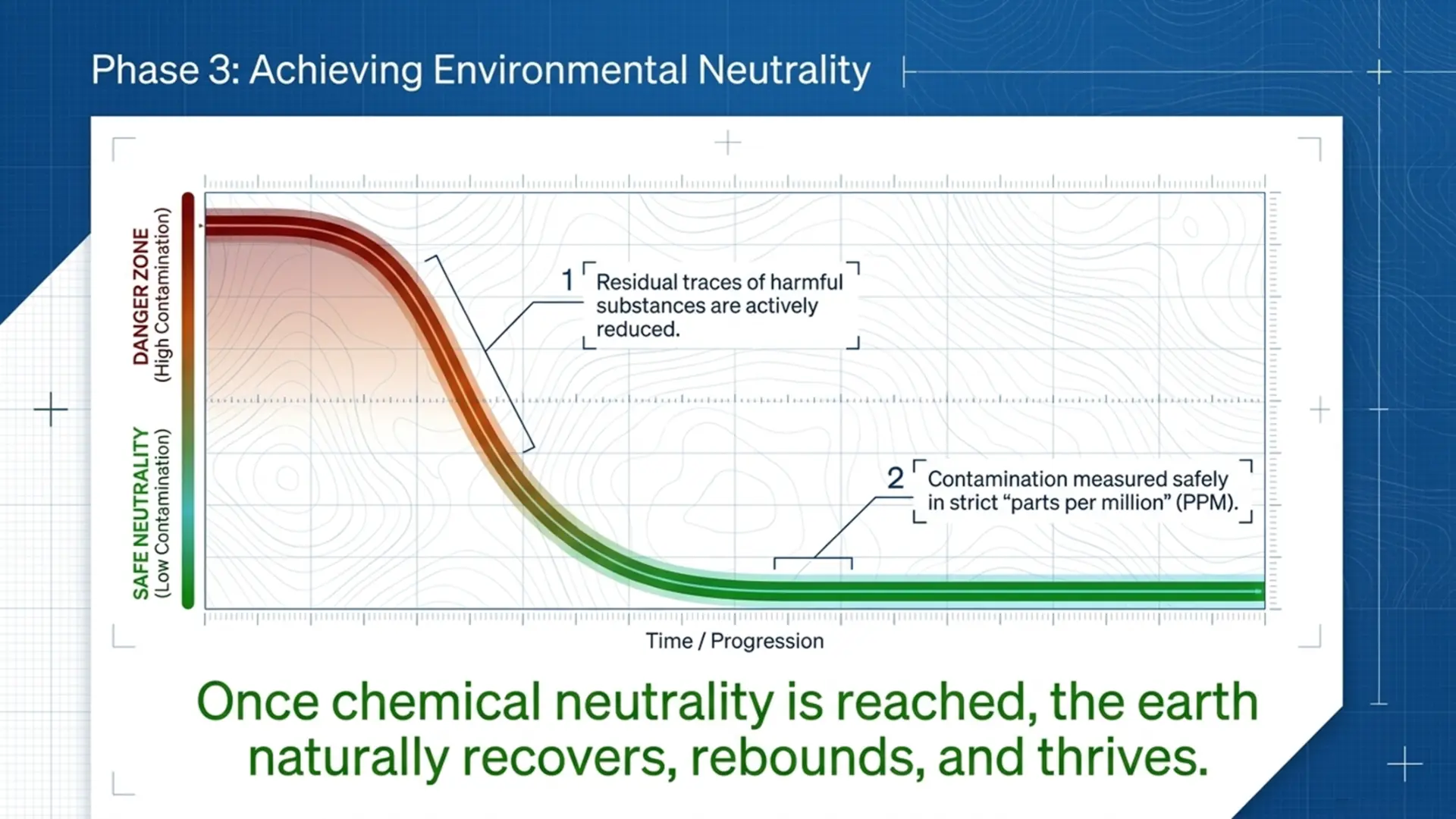
Residual traces are reduced to safe levels—measured in parts per million—as the earth naturally recovers, returning the site to an environmentally neutral state so that it can eventually rebound and thrive.
Knowledge powers recovery
Good knowledge is the foundation of effective development. People act when they feel empowered—and they feel empowered when they have relevant knowledge and practical support tailored to the realities of the reclamation process.